Ciem Cornelissen
Researcher at IDLab, Ghent University - imec

IDLab, Department of Information Technology
Ghent University - imec
Ghent, Belgium
I am a PhD researcher at IDLab, Department of Information Technology at Ghent University - imec, where I specialize in adaptive sensor fusion for autonomous systems with applications in precision agriculture and environmental monitoring. My research focuses on developing robust AI-driven perception systems that bridge fundamental machine learning innovation with real-world deployment challenges.
My academic journey reflects a deliberate progression from fundamental science to applied AI. I completed my Bachelor’s and Master’s in Physics at Ghent University, where I developed strong analytical foundations and an aptitude for dissecting complex problems at their core. During my physics master’s, elective courses in artificial intelligence sparked a passion that led me to pursue an Advanced Master’s in Artificial Intelligence at KU Leuven (2023), where I specialized in deep learning, computer vision, and data science. This trajectory has uniquely positioned me to tackle the multi-modal sensor fusion challenges central to my PhD research.
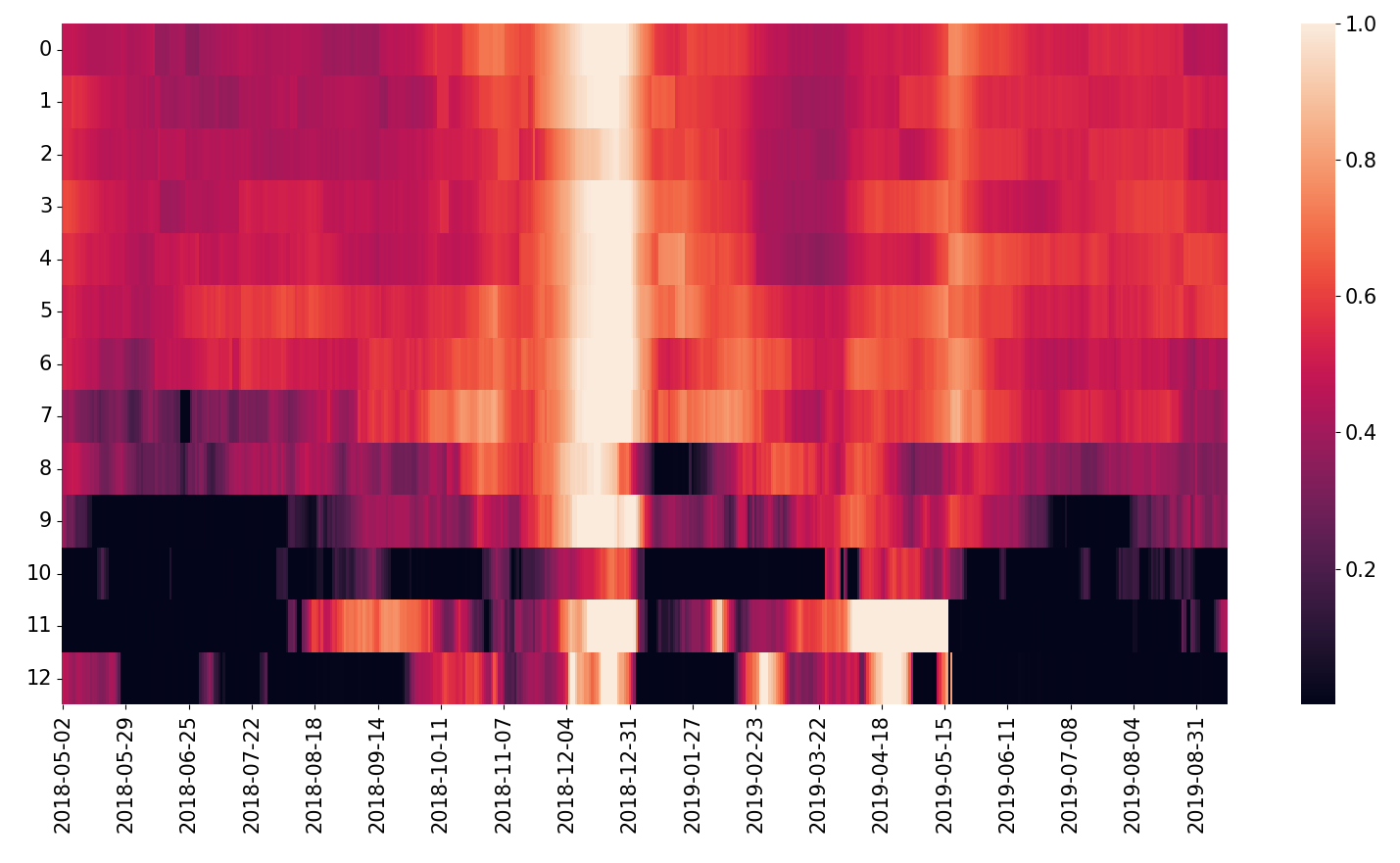
My current research centers on the synergistic combination of Hyperspectral Imaging (HSI), RGB and SWIR sensors, Unmanned Aerial Vehicles (UAVs), and Deep Learning; particularly transformer-based architectures. I develop end-to-end systems that transform raw multi-modal sensor data from autonomous platforms into actionable insights. A key focus is making these AI systems practically deployable in uncontrolled field environments by addressing challenges like variable illumination, limited computational resources on edge devices, spectral-spatial trade-offs, and the need for real-time processing.
Key Research Contributions:
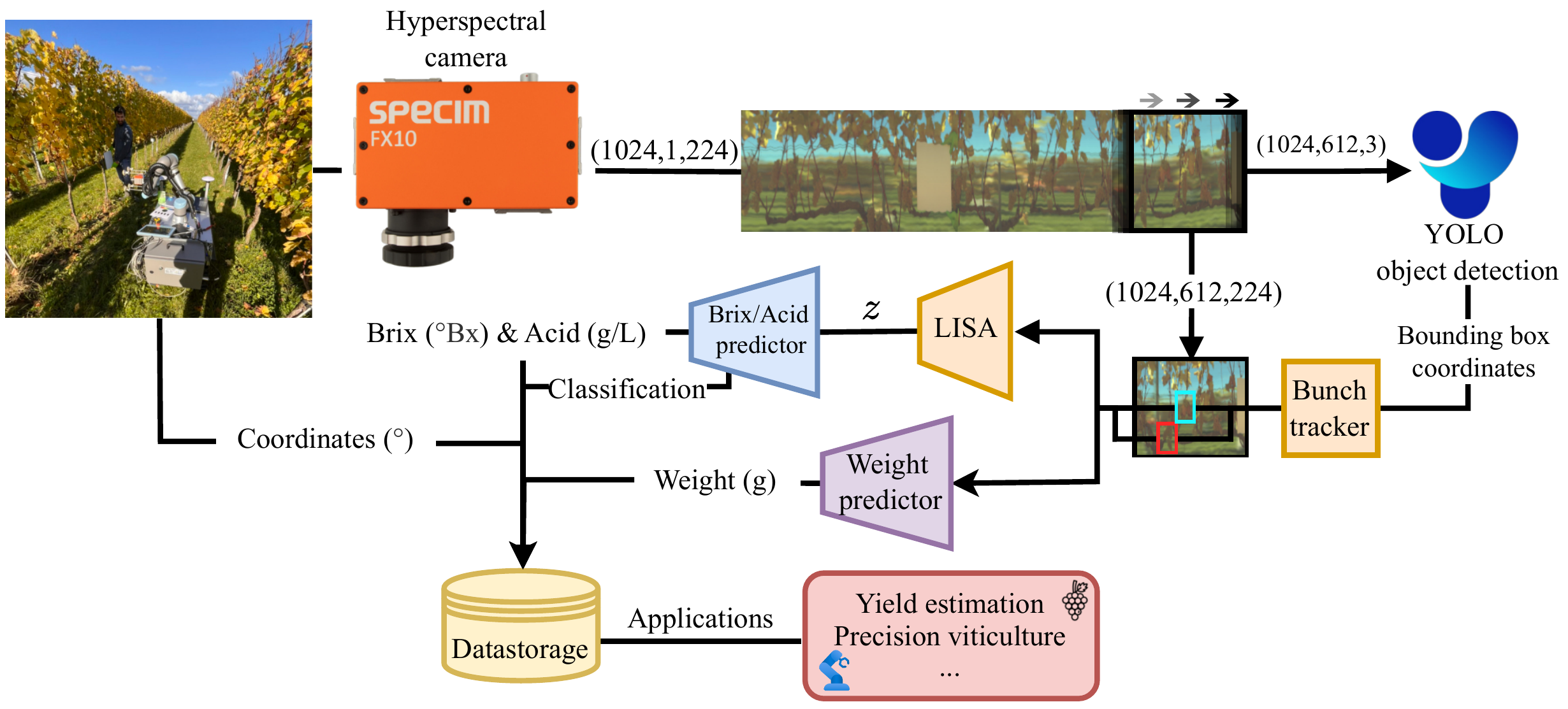
- Developed LISA (Light-Invariant Spectral Autoencoder), a domain-adversarial deep learning framework enabling robust, non-destructive grape quality assessment under varying illumination, part of a complete IoT-enabled robotic system for precision viticulture
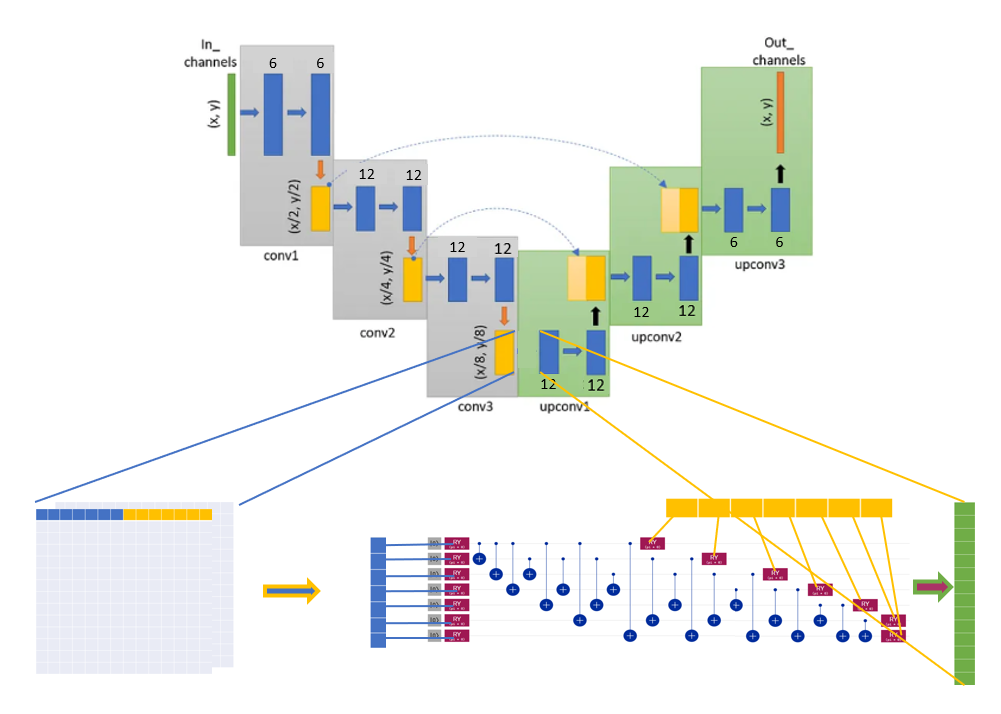
- Created OHSLIC (Online Hyperspectral Simple Linear Iterative Clustering), an efficient algorithm achieving real-time phenotype segmentation on resource-constrained UAVs through adaptive, on-device processing
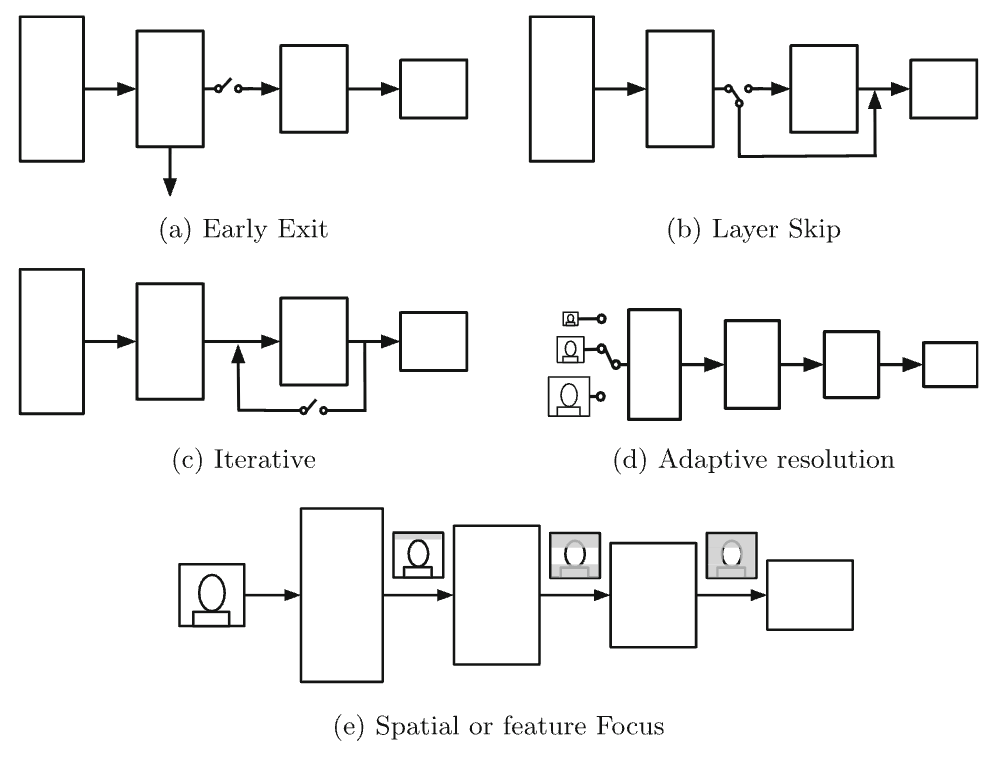
- Co-authored research on computational fairness in adaptive neural networks, introducing resource allocation disparities as a novel dimension of algorithmic fairness and highlighting ethical considerations in efficiency-driven AI
My work has been published in leading venues including the IEEE Internet of Things Journal, IEEE/CVF Winter Conference on Applications of Computer Vision (WACV), and Neural Computing and Applications. Beyond research, I serve as a Teaching Assistant for the Reinforcement Learning course at Ghent University (2024-2026) and supervise master’s thesis students on topics spanning hyperspectral imaging, deep learning for precision agriculture, and multi-modal sensor fusion.
I am driven by a deep fascination with AI’s transformative potential for autonomous systems, particularly in optimizing real-time perception through adaptive sensor fusion. My research philosophy centers on identifying fundamental deployment barriers in real-world environments and developing innovative, domain-invariant solutions that advance both the theoretical foundations and practical applicability of AI-driven perception systems.
news
| Oct 20, 2025 | New blog post published! Read about our illumination-invariant AI system for in-field grape quality mapping.   |
|---|---|
| Oct 15, 2025 | Deep Dive Talk at FAIR Day 2025 |
| Oct 03, 2025 | New paper published in IEEE Internet of Things Journal!  Our work on illumination-invariant deep learning for in-field grape yield and quality mapping is now available. Our work on illumination-invariant deep learning for in-field grape yield and quality mapping is now available. |
| Jun 30, 2025 | New publication in Neural Computing and Applications! Our research on computational fairness in adaptive neural networks explores resource allocation disparities across demographic subgroups. |
| Mar 01, 2025 | Excited to present our OHSLIC algorithm at WACV 2025!  Adaptive clustering for efficient phenotype segmentation of UAV hyperspectral data. Adaptive clustering for efficient phenotype segmentation of UAV hyperspectral data. |