Ciem Cornelissen
Researcher at IDLab, Ghent University - imec

IDLab, Department of Information Technology
Ghent University - imec
Ghent, Belgium
I am a PhD researcher at IDLab, Department of Information Technology at Ghent University - imec, where I specialize in self-supervised representation learning and label-efficient world models for autonomous perception and control. My work spans multi-modal sensor fusion and latent-dynamics models that learn from observation sequences with limited manual or action labels.
My academic journey reflects a deliberate progression from fundamental science to applied AI. I completed my Bachelor’s and Master’s in Physics at Ghent University, where I developed strong analytical foundations and an aptitude for dissecting complex problems at their core. During my physics master’s, elective courses in artificial intelligence sparked a passion that led me to pursue an Advanced Master’s in Artificial Intelligence at KU Leuven (2023), where I specialized in deep learning, computer vision, and data science. This trajectory has uniquely positioned me to tackle the multi-modal representation learning challenges central to my PhD research.
My current research centers on two complementary questions: how to learn unified representations from heterogeneous sensors such as RGB, LiDAR, and thermal cameras, and how to learn planning-capable latent dynamics when action labels are scarce. I develop transformer-based predictive architectures that learn from unlabelled observations and can support perception tasks or goal-conditioned planning after limited task-specific supervision.
Key Research Contributions:
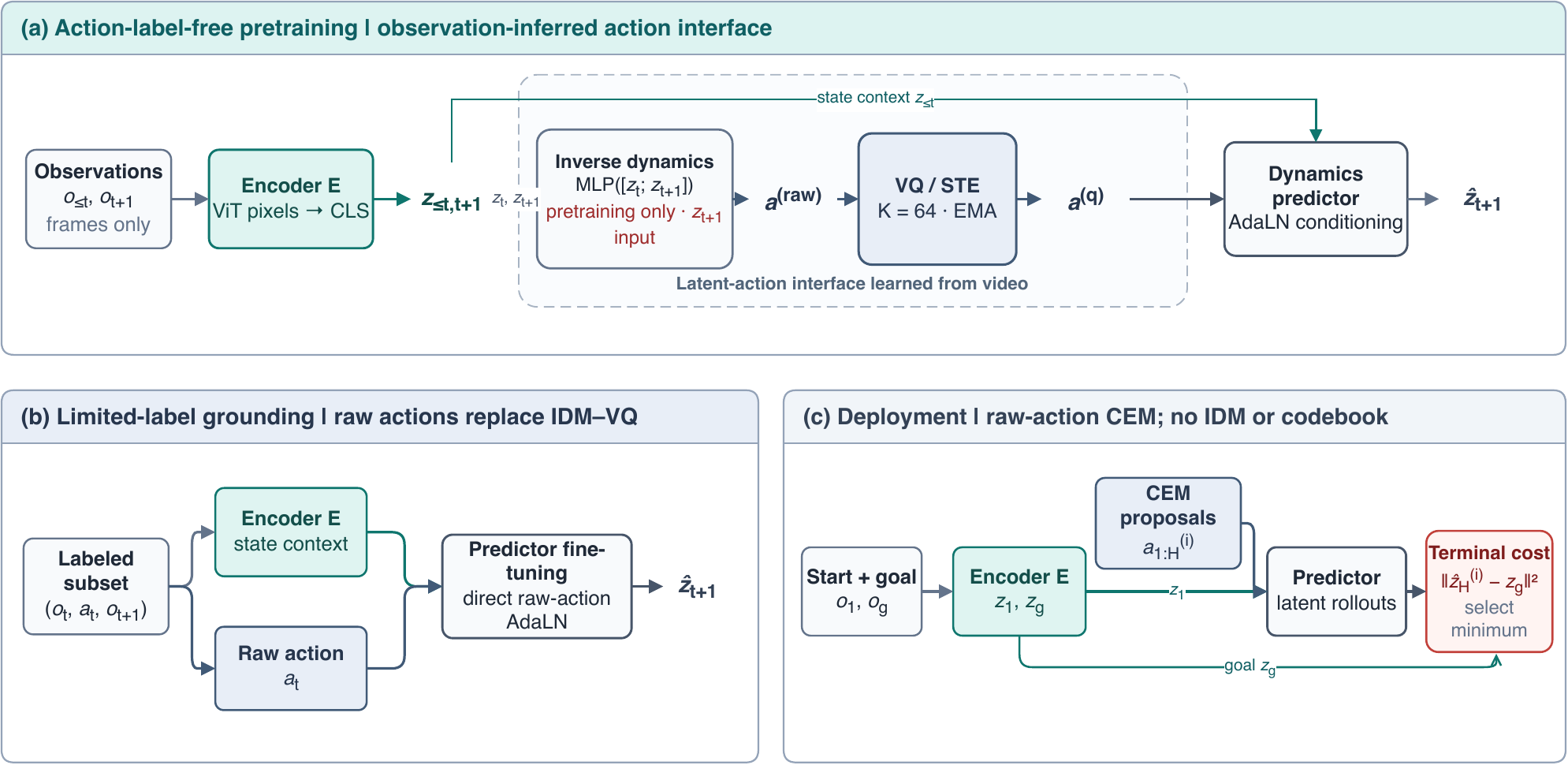
- Developed LaFreeWM, a JEPA world model that infers discrete latent actions from unlabelled observation sequences before grounding its predictor for raw-action planning with a small labelled subset; the work also identifies a prediction-planning mismatch in which lower prediction error does not necessarily produce better control
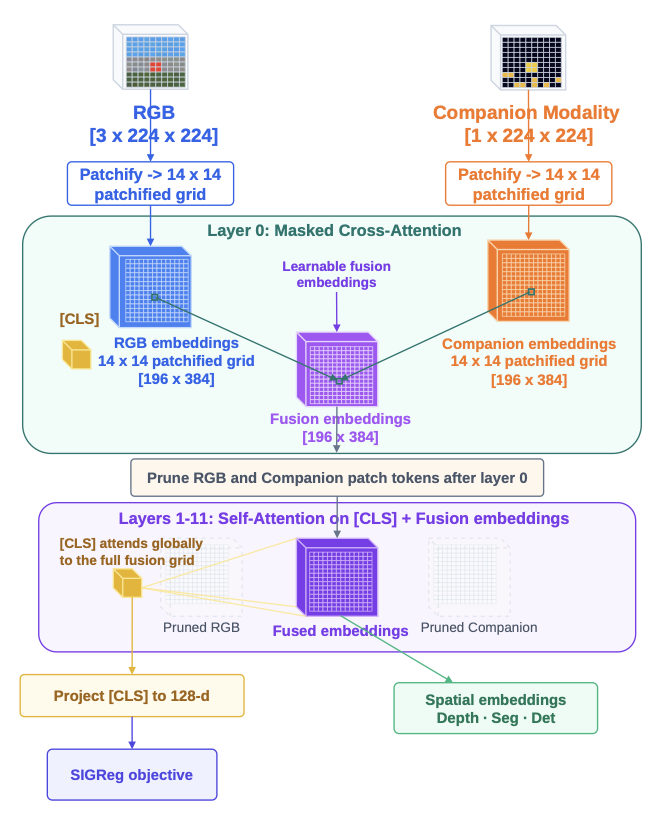
- Developed Le MuMo JEPA, a multi-modal self-supervised framework that learns unified RGB-LiDAR-thermal representations through learnable fusion tokens, achieving strong performance-efficiency trade-offs on Waymo, nuScenes, and FLIR benchmarks (CVPR 2026 URVIS Workshop)
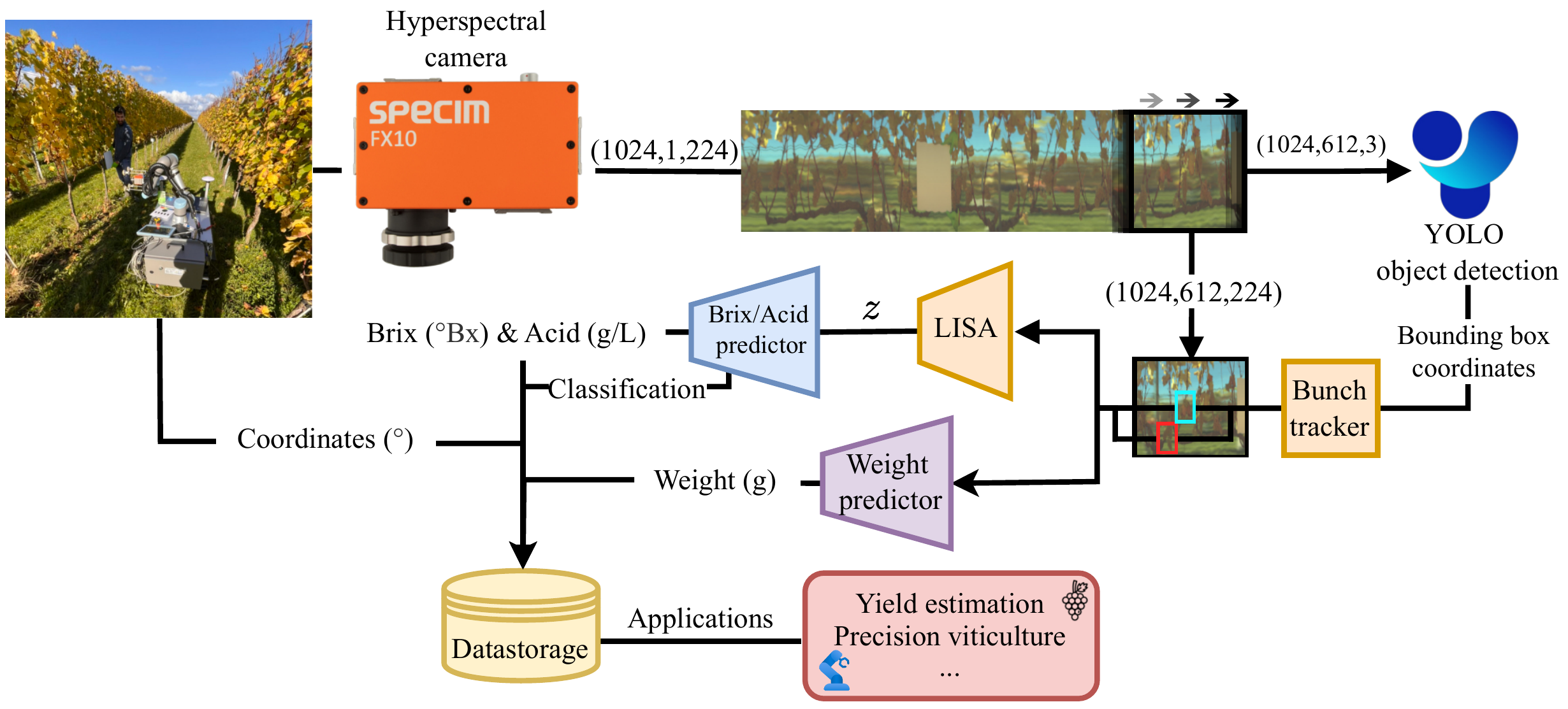
- Developed LISA (Light-Invariant Spectral Autoencoder), a domain-adversarial deep learning framework enabling robust spectral analysis under varying illumination conditions, part of an IoT-enabled robotic perception system
- Created OHSLIC (Online Hyperspectral Simple Linear Iterative Clustering), an efficient algorithm achieving real-time segmentation on resource-constrained edge devices through adaptive, on-device processing
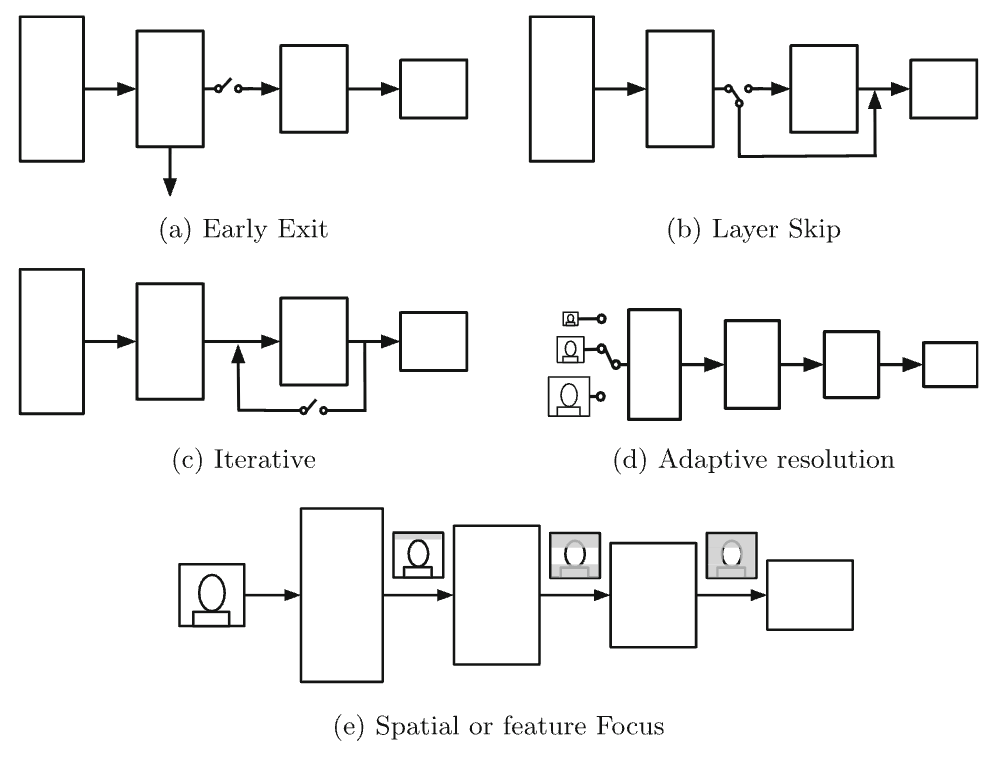
- Co-authored research on computational fairness in adaptive neural networks, introducing resource allocation disparities as a novel dimension of algorithmic fairness and highlighting ethical considerations in efficiency-driven AI
My research includes LaFreeWM and peer-reviewed work in the CVPR 2026 URVIS Workshop, IEEE Internet of Things Journal, IEEE/CVF Winter Conference on Applications of Computer Vision (WACV), and Neural Computing and Applications. Beyond research, I serve as a Teaching Assistant for the Reinforcement Learning course at Ghent University (2024-2026) and supervise master’s thesis students on topics spanning multi-modal self-supervised learning, world models, and autonomous perception.
I am driven by a deep fascination with building AI systems that develop internal world models from multi-modal sensory data, enabling autonomous agents to perceive, predict, and act in complex environments. My research philosophy centers on designing self-supervised objectives and fusion architectures that learn generalisable representations, advancing both the theoretical foundations and practical deployment of multi-modal perception systems.
news
| Sep 01, 2026 | New preprint: LaFree World Model (LaFreeWM) introduces Label-Free pretraining for action-conditioned JEPA world models. It learns discrete latent actions from unlabelled observation sequences and uses limited labelled data to support continuous-action planning. Read the preprint. |
|---|---|
| Mar 26, 2026 | New paper accepted at CVPR 2026 URVIS Workshop!  Our work on Le MuMo JEPA, a multi-modal self-supervised framework for learning unified RGB-LiDAR-thermal representations with learnable fusion tokens, has been accepted! Our work on Le MuMo JEPA, a multi-modal self-supervised framework for learning unified RGB-LiDAR-thermal representations with learnable fusion tokens, has been accepted! |
| Oct 20, 2025 | New blog post published! Read about our illumination-invariant AI system for in-field grape quality mapping.   |
| Oct 15, 2025 | Deep Dive Talk at FAIR Day 2025 |
| Oct 03, 2025 | New paper published in IEEE Internet of Things Journal! Our work on illumination-invariant deep learning for in-field grape yield and quality mapping is now available. |